
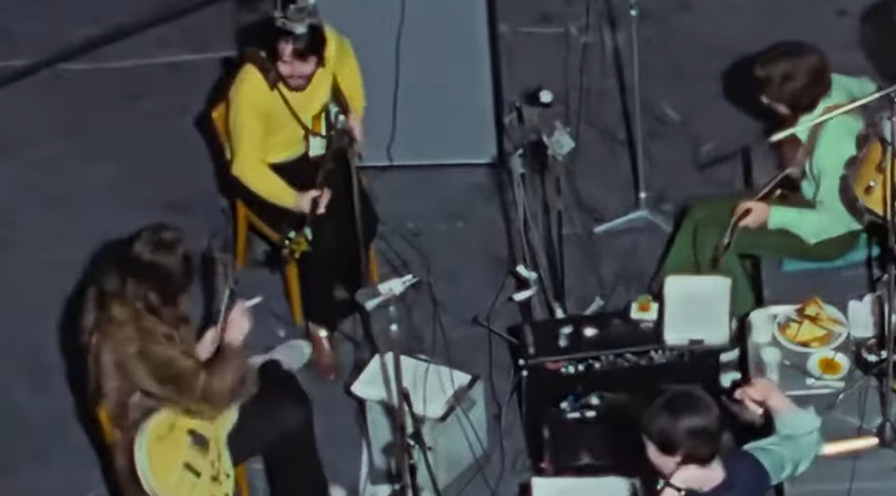
Here are two facts I believe to be axiomatically true about striving to make great games within the studio system:
-
- The money wants to protect itself, and thus wants a safe formula. It is the nature of art under capitalism that the power structures designed to protect investments will always seek out preexisting formulas for success, attempt to reproduce them as cheaply as possible, and ultimately produce a product that reverts to a mean. Precedent, quantified by profitability, will be the first and last consideration before any creative decision with a dollar sign attached (which is most of them), so the results of that approach will inevitably trend towards “more of the same, but 1% better than the other games that show up when you click such-and-such tag on Steam”.
- The audience demands innovation, and innovation requires playfulness. A “monkey see, monkey do” approach is fundamentally a misguided way to make a great game, let alone to make a luxury recreational entertainment product that must compete on quality in a heavily saturated marketplace straddling an attention economy. The only real formula for long-term sustainable success in art is human-centered: creating a safe space where creative people feel comfortable and empowered to show up with their whole ass and riff around until they make something new and awesome. When a game lacks that, the audience can feel it, and they instinctively reject it.
Like Coyote chasing the moon, I think the interplay between these two notions is a cosmic constant. So long as we make games with the same set of alchemic ingredients — a curated assembly of creative professionals, employed by a corporation, funded by stakeholding investors seeking a maximally favorable risk:return ratio on an inherently high-risk investment — neither of the above facts will change, and their eternal tug-of-war will daily define the material circumstances in which we make art.
Any middle manager at a studio knows this. Navigating the hurricane that arises from the collision of these two pressure fronts is, basically, your whole job. You go into a meeting and give The Bosses a reality check on what the art is telling you on the ground. Then you go into a meeting with the creative people and tell them the new reality the bosses have decided must be true in order for the world to keep on spinning. And we all muddle along, and do our best, and try to create the best thing we could, asterisk, given the conditions and resources we had to work with.
This is How It Is Here. This is business-as-usual for the game industry.
Here is the problem.
Business as usual isn’t working.
The past few years have seen an historic bloodletting of talent from the traditional studio system. Something like 45,000 jobs have been shed in the last 2-3 years alone. As I write this, just yesterday, Epic–you know, the company making the big game every other CEO would literally murder someone to have in their portfolio?–just laid off a fifth of their workforce. A thousand people, gone.
But at least the games themselves are profitable, right? Otherwise, why are we doing all this?
Well, not really. Only about a quarter of games make any profit at all, and only a vanishingly small segment of those make genuine, substantial, “we get to keep doing this” returns. In 2024, only about 0.5% of the more than 12,000 games released made more than a million in returns (which, if you’re familiar with production budgets, ain’t much).
The other 99.5%? To the ash heap.
Setting aside all the caveats that would be offered here by a good data scientist (which I am not), I think the general conclusion still holds:
The overwhelming majority of games, and game studios, fail
Not some. Not most. The overwhelming majority.
Which leads one to a simple question:
If the prevailing business model results in constant failure by most companies who operate under it… is that not a pretty shitty business model?
After all, what other industry accepts a 99.5% failure rate and calls it the best possible approach? That’s a 1-in-200 chance! If I handed you a jar that had 200 beans in it, and said to pick one, and if you pick the right one I’ll give you a small amount of money, but if you pick the wrong one, I’ll shoot you in the head, would you roll up your sleeve and have a go?
Would you call it a good way to make money?
Would you defend it as the only way to make money?
The answer, of course, is obviously the business model sucks. In my experience, most game industry executives will freely admit as much, provided none of the real Money People are within earshot. But the vibe is always: Hey, the Sword of Damocles hangs over us all; we just have to do our best. If you don’t like it, go work in another industry.
Or, maybe, we could try something different.
I can’t change the economics under which the game industry operates. Nor, perhaps, could any sequence of words convince any sane investor that the best way to de-risk their investment in a game is, actually, to aggressively inoculate the entire development process against a risk-averse mindset, because its presence tends to result in a shitty product. It’s like trying to convince a person to amputate their own arm: It goes against every reasonable instinct of self-preservation.
But I’m a writer. All I have is my words. And so all I can do is offer the alternative perspective I don’t see many people out there articulating. I would sum that perspective up as follows:
Great games that make a ton of money by and large do not arise from studios where people are simply showing up, doing what they’re told, not giving a shit, and just punching the clock. There may be the occasional outliers, but outliers are bad precedent from which to form a business model.
Great games that make a ton of money most reliably arise from studios where people are coming to work excited every day, bringing their whole selves to the project, with a fiery joy and desperation to make something amazing. That is an abstract, squishy, difficult-to-quantify fact — but as any scientist will tell you, just because something is difficult to measure doesn’t make it less real.
Developers create great games when they are excited, because that excitement fosters experimentation.
Innovation. Riffing. Playfulness.
One level designer trying to make another laugh with a funny enemy placement.
A writer sneaking a stupid pun into an item description because it makes them happy.
A composer throwing a kazoo solo into the big boss battle track because, hey, why not? Let’s try it!
“Wouldn’t it be funny if…”
“I have a stupid idea…”
“Dude, omg, check this out…”
These are the manifestations of a productive and healthy development environment. Enough of these, united under a coherent and compelling vision, results in a great game.
Thus, successful games will tend to arise, inevitably, over a long enough timeline, at any studio that cultivates a workplace culture and development environment that allows for playfulness in the work. Provided, of course, that in the event of failure, everyone is learning and growing better at the other stuff. But playfulness is the foundation that holds up the building, and without it, the whole thing collapses.
But like getting a new cat to trust you, playfulness is inherently fragile. It requires safety, stability, and dependability under stress. And once it’s lost, it’s almost impossible to restore. Any creative professional with a reasonable amount of experience and self-preservation knows this intuitively and gains a sort of sixth sense for it — and the moment the wind shifts, they will either check out or start looking for the exit.
And so, protecting the space for play from the constant psychic assault of capitalism is a daily battle that never ends. It is also the only reliable path to creative, and thus commercial, success.
For executives and investors, the take-away should be the following:
Your goal should not be to protect the money from the artists. It should be to protect the artists from the instincts of the money. This is, paradoxically, the best way to protect the money. If that feels scary, hard, and uncomfortably abstract, that’s because it is. Welcome to the real world. If you don’t like it, don’t invest in entertainment; you don’t have the stomach for it.
I said at the top of this post that, so long as the facts on the ground remain the same, those two big axioms, and their eternal conflict, will not change. Here’s the second half of that:
If the approach does not change, the industry will die.
In fact, there’s a very compelling case to be made that it already has. Much of the talent the industry has already lost will never be coming back. Collectively, that is quite literally thousands of years of institutional knowledge and expertise, poof, gone. That’s “burning of the Library of Alexandria” type stuff.
It takes a generation to cultivate a talent pool of game developers with not just craft skill, but experience making and shipping games in a commercial environment — and that talent pool has now been irreversibly decimated. The forest has not just been cut down: it has been burned, salted, and paved with concrete. It will take decades before green saplings start peeking up again.
If there is to be any path forward for the industry in the wake of this apocalypse we’ve all lived through, it must be a fundamental and paradigmatic shift in business models, power structures, investor incentives, and development culture, that starts treating these squishy creative concerns as tangible business realities, and prioritizes cultivating and protecting the space for play.
In the absence of that, AA studios (hell, even AAA!) will go the way of the dodo. The only games that turn a profit will be either breakout indie megahits like Stardew Valley and Balatro, or colossal AAAA juggernauts that cost billions and the better part of a decade to develop. Neither of which equals a sustainable industry, either for investors to put their money in, or for working-class creative people to earn a fucking living in.
Protect the space for play. The future of this industry depends upon it.